
Pennsylvania Death Records Search
Pennsylvania death records are official documents that capture key facts about a person's passing, including the date, place, and cause of death. The state has maintained these vital records since January 1906, and older records going back to 1893 can be found at county courthouses. Whether you need a certified copy for legal purposes or want to trace family history, this guide walks you through every option available for finding Pennsylvania death certificates and historical vital records.
Pennsylvania Death Records Quick Facts
Pennsylvania Division of Vital Records
The PA Division of Vital Records is the central state office for death certificates from 1906 to the present. It operates under the Pennsylvania Department of Health, which serves as the official custodian of all vital records in the state. The office is located at P.O. Box 1528, New Castle, PA 16103-1528, and can be reached by phone at (724) 656-3100 or toll-free at 844-228-3516. This office issues only certified copies, which are printed on specialized security paper with a raised seal. That seal makes the document legally valid for courts, insurance companies, and financial institutions.
Every death in Pennsylvania must be reported and filed within four business days, as required by state law. Under 28 Pa. Code Section 1.11, death certificates must be filed within 96 hours after death occurs. The 28 Pa. Code Chapter 1 also governs how records can be amended under Section 1.36, allowing corrections to be made after filing. This regulatory framework ensures that every certificate contains accurate, complete information from the moment it is created.
The image below, sourced from the PA Department of Health Division of Vital Records page, shows the official online ordering portal for Pennsylvania death certificates.
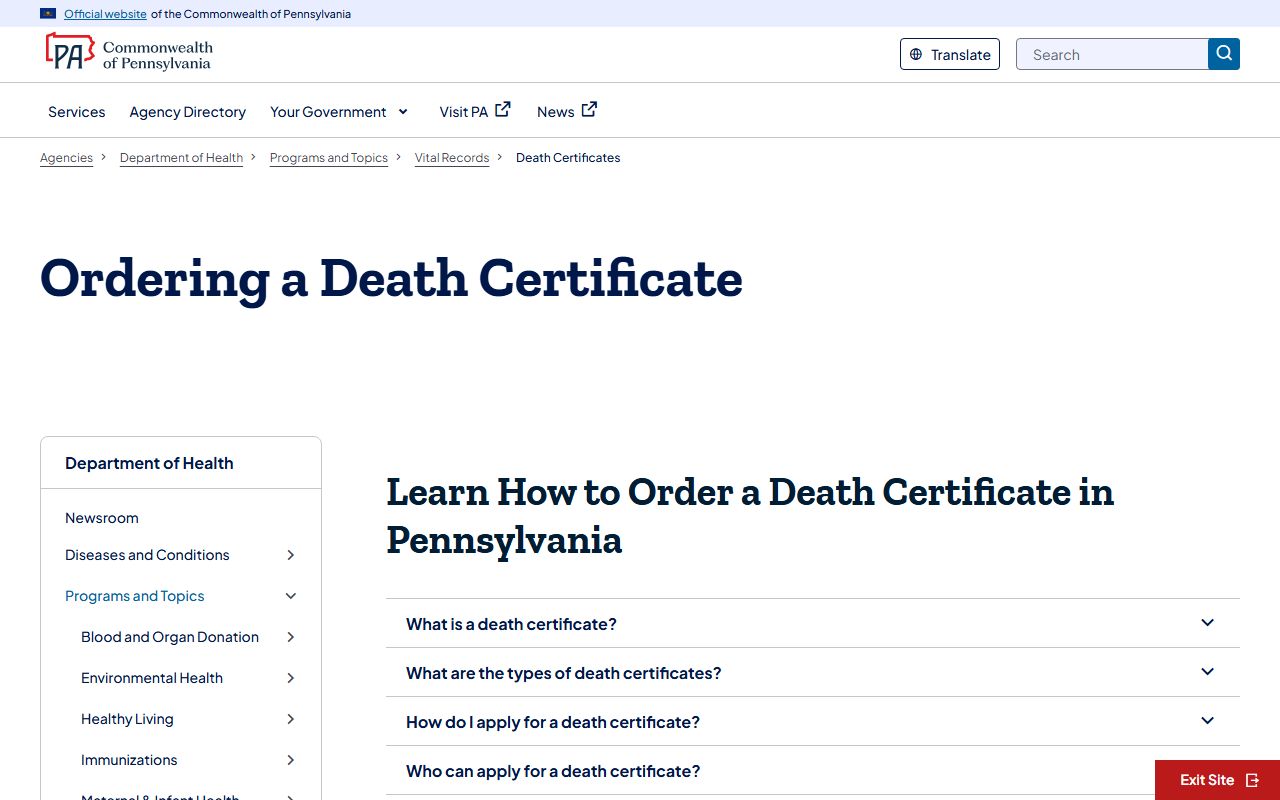
The portal allows eligible requestors to order certified Pennsylvania death records directly through the state's secure system.
Two Types of Pennsylvania Death Certificates
Pennsylvania offers two versions of its certified death certificates. Knowing which type you need before you apply will save time. The first type includes medical information, showing the cause and manner of death. This version is required when filing a life insurance claim, applying for pension benefits, or building a family medical history. The second type excludes all medical details and is used for closing bank accounts, canceling utility accounts, or transferring property titles. This second type is only available for deaths that occurred after 2019.
Both versions cost $20 each, regardless of how many copies you order. If you choose to order online through the state's portal at mycertificates.health.pa.gov, an additional $10 service fee applies. The physical record itself looks the same in both cases. It arrives on the same security paper with the same raised seal. The only difference is what appears in the medical cause-of-death section. Choose carefully based on what the receiving institution actually requires.
This screenshot from the PA Department of Health Genealogy page illustrates resources available for researching Pennsylvania vital records through official state channels.
The genealogy section of the Department of Health website also explains the 10-year date search option for researchers who do not know the exact death date.
Who Can Request Pennsylvania Death Records
Access to Pennsylvania death certificates is restricted by state law. Under Pennsylvania Statute 35 P.S. §450.801, death records are not open to the general public until 50 years after the date of death. Before that point, only specific people may request a certified copy. All requestors must be at least 18 years old and must submit a signed application along with a legible copy of a valid government-issued photo ID.
Eligible requestors include the spouse, ex-spouse (with supporting documentation), parent, step-parent, sibling, half-sibling, son, daughter, step-son, step-daughter, grandparent, and grandchild of the deceased. Legal representatives are also eligible, including those holding power of attorney, attorneys acting for an estate, and government offices administering an estate. An individual who can show a direct financial interest in the record may also qualify. Extended family members who can document their direct relationship to the deceased are eligible as well. The PA Vital Statistics Law sets out the full legal requirements for who may access these records.
This image from the PA open records law and death certificate access page outlines the rules governing public access under Pennsylvania's vital records privacy statute.
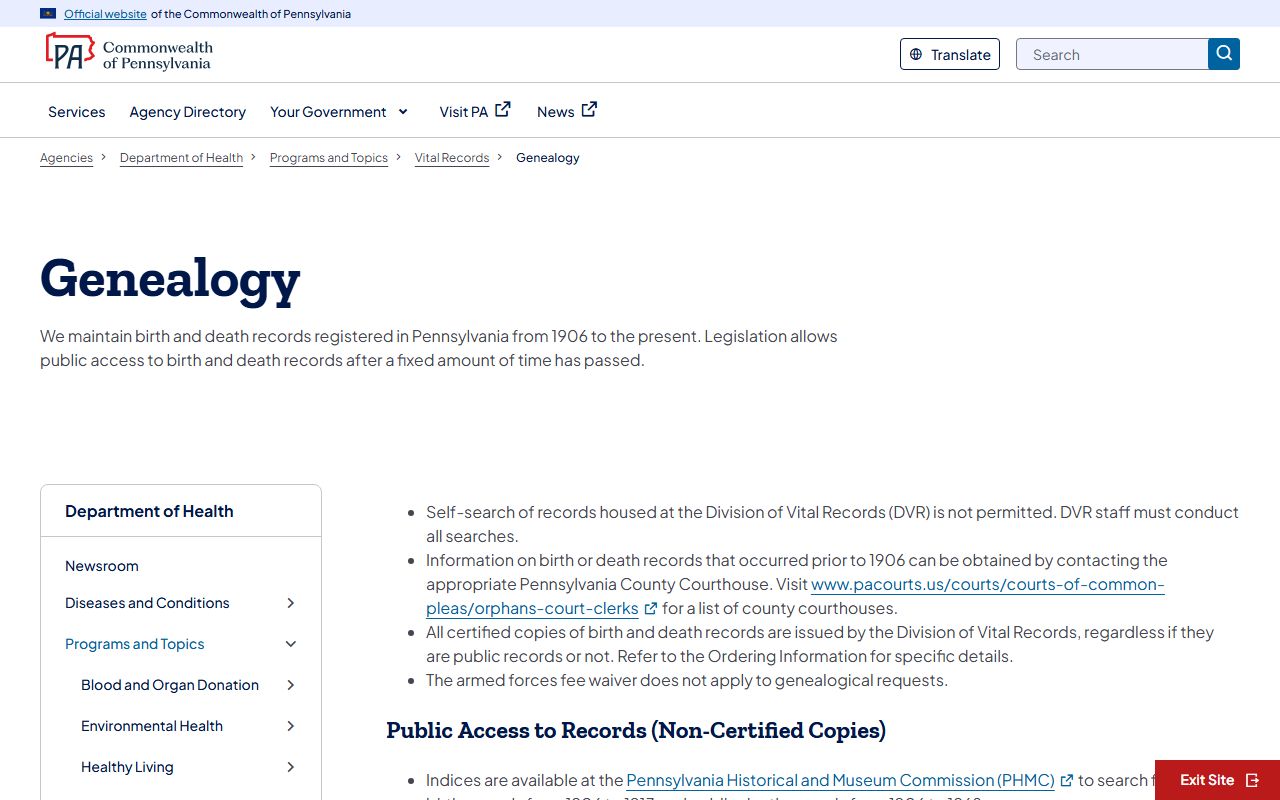
Once the 50-year period has passed, death records become publicly accessible and are held by the Pennsylvania State Archives.
Note: Death records more than 50 years old are released to the public, and new indexes are posted to the PA State Archives website at the end of each calendar year.
How to Order Pennsylvania Death Certificates
There are three ways to get a certified Pennsylvania death certificate: online, by mail, or in person. Online ordering is the fastest option. The state authorizes two platforms for this. The first is the state's own portal at mycertificates.health.pa.gov. The second is VitalChek, which is the only third-party vendor authorized by the state. Both options add the $10 service fee on top of the $20 certificate cost.
For mail orders, you send a completed application form, your photo ID copy, and payment to the Division of Vital Records at P.O. Box 1528, New Castle, PA 16103-1528. In-person visits are accepted at the office located at 105 Nesbitt Road, New Castle, PA 16105. You can also fax requests to 866-283-3216. The CDC vital records reference for Pennsylvania confirms that all requests require both a signed application and a photo ID. For deaths before 1906, records must be obtained from the courthouse in the county where the person died.
This image comes from the CDC where to write for Pennsylvania vital records page, which provides federal guidance on accessing state-level death certificates.
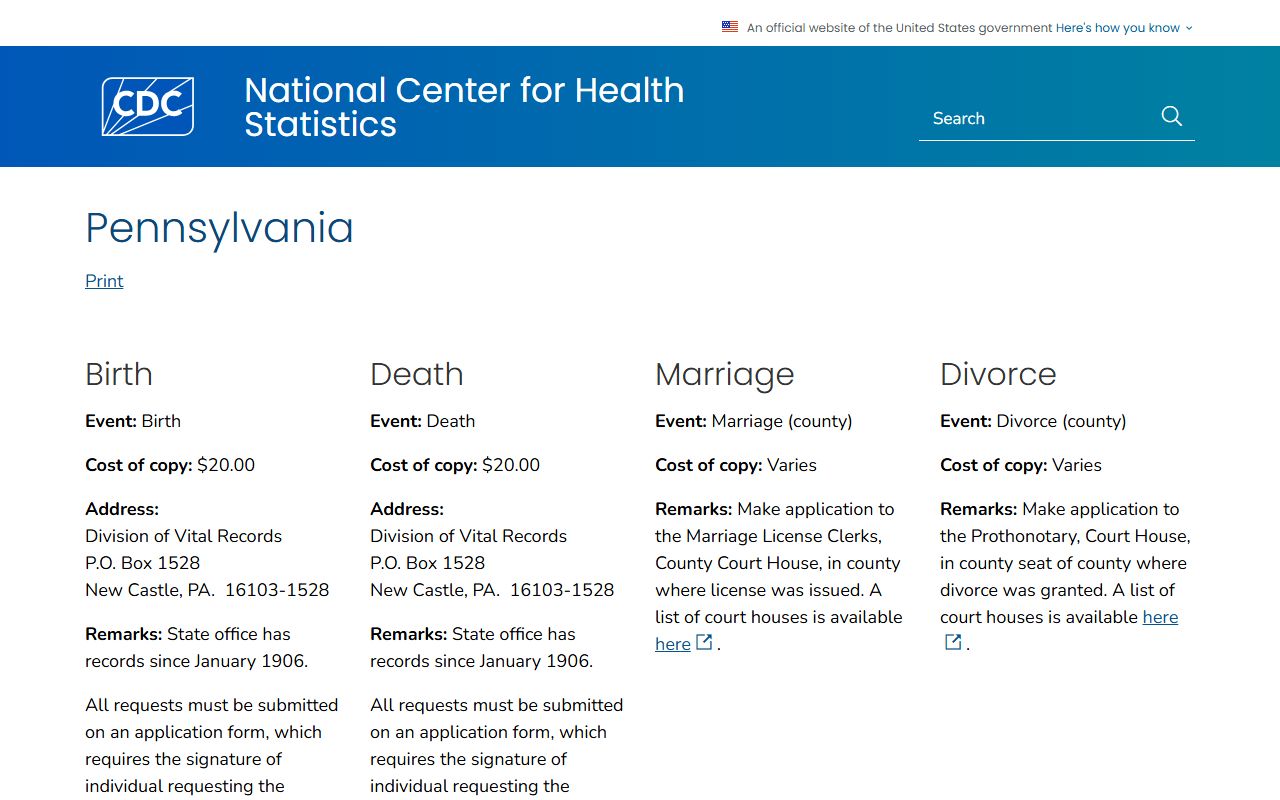
The CDC page is a helpful cross-reference that confirms Pennsylvania's certificate fees and mailing address for the Division of Vital Records.
This screenshot from the VitalChek Pennsylvania authorized online ordering page shows the state-approved third-party portal used by many requestors.

VitalChek processes orders securely and forwards them directly to the Division of Vital Records for fulfillment.
Pennsylvania State Archives Vital Records
The PA State Archives holds death certificates from 1906 through 1975. These records are publicly available because the 50-year restriction has passed for all of them. Researchers can request uncertified copies using the Vital Records Request Form, available as a PDF or through direct online submission. If you need a certified copy from this period, you still contact the Division of Vital Records. The State Archives handles uncertified copies only.
Death certificates from 1906 to 1972 are also available in digital form through Ancestry.com. Pennsylvania residents can access the Pennsylvania-specific collections on Ancestry.com at no cost, thanks to a partnership with the PA Historical and Museum Commission. This free access covers Pennsylvania death records, birth certificates from 1906 to 1917, and county marriage records from 1885 to 1950.
The image below is sourced from the PA State Archives vital statistics records page and shows the range of records available for public research.
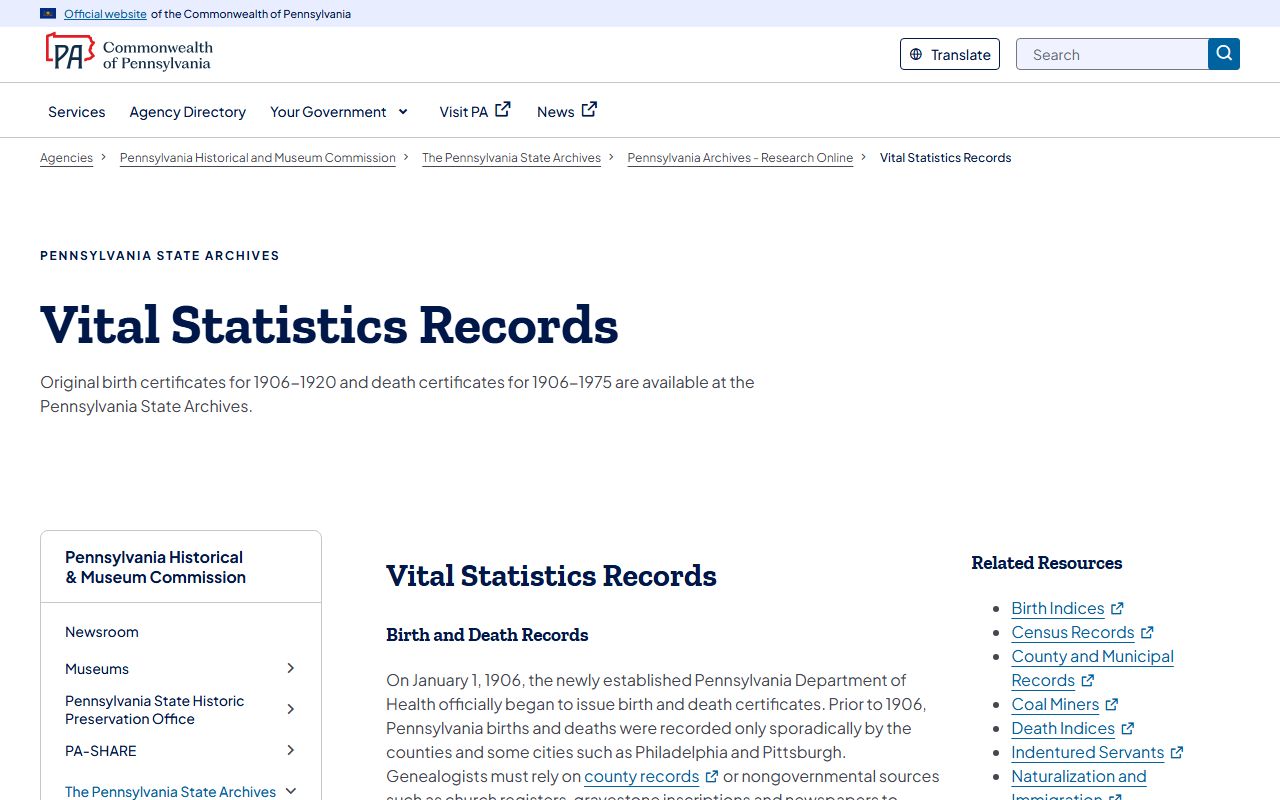
The State Archives provides direct access to uncertified copies and death indices that help researchers locate the right records quickly.
Pennsylvania Death Indices and Record Search
The PA State Archives Death Indices cover the years 1906 through 1975. The indices are organized by year, with names grouped alphabetically by surname. Each entry includes the State File Number, which is the key piece of information you need to request the actual death certificate. Without that number, locating a specific record in the physical collection is much harder. Searching the index before submitting a request will save considerable time.
Two index periods use a different naming system. Records from 1920 to 1924 and from 1930 to 1951 are indexed using the Russell Soundex method. Soundex groups names by how they sound rather than how they are spelled. This is useful when family names were recorded under different spellings across different records. If you are searching for a common surname with multiple spelling variants, the Soundex index can reveal records you might otherwise miss entirely.
This image is from the PA State Archives Death Indices page, which provides online access to indexed death records spanning seven decades.
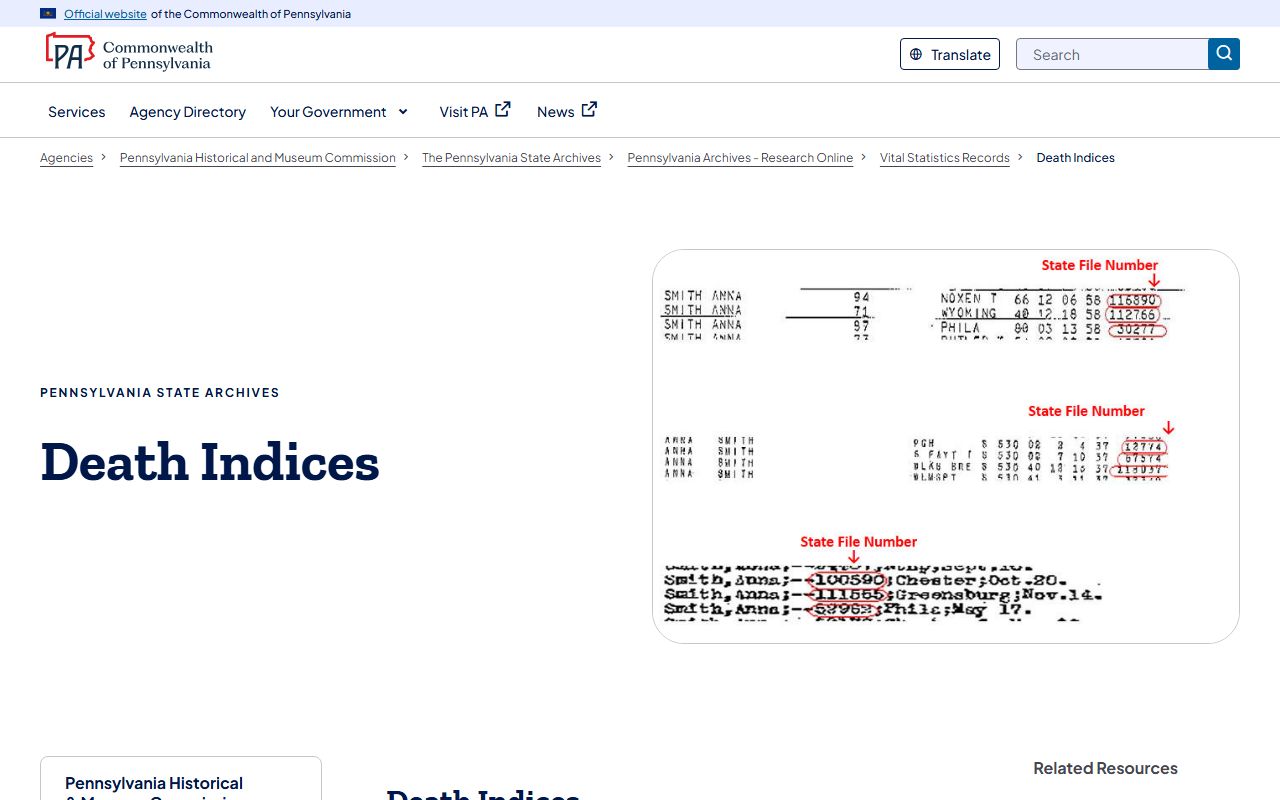
Finding the State File Number in the index is the first step toward requesting a paper copy of the actual Pennsylvania death certificate.
The PA State Archives Birth Indices cover 1906 through 1919 and follow a similar structure. Researchers viewing original certificates at the State Archives in person are limited to ten records per day.
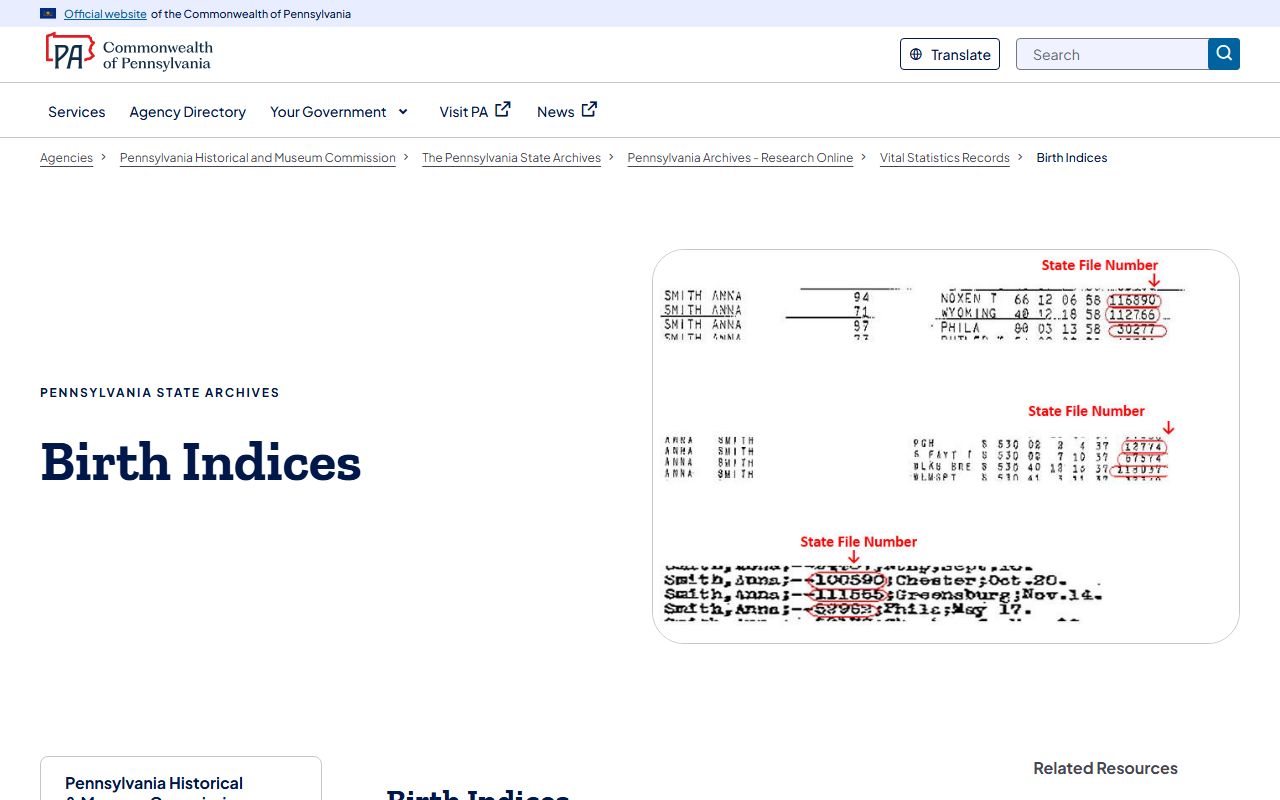
The birth indices complement the death records collection and help researchers build complete family timelines from a single archive source.
Note: The 28 Pa. Code Section 1.36 allows corrections to be added to a death certificate after it is filed, so older indexed records may have been amended since they were first recorded.
Pennsylvania Death Records Before 1906
Statewide death registration in Pennsylvania began on January 1, 1906. Before that date, record-keeping was handled at the county level. County courthouses hold death records from 1893 to 1906, filed through the Clerk of Orphans Court. Going back further, the Register of Wills in each county kept birth and death records from 1852 to 1854. Of the 64 counties that existed at that time, 49 participated in that registration system. Those early records vary in quality and completeness depending on the county.
Some cities started their own registration systems well before the state took over. Philadelphia began keeping death records in 1860. Pittsburgh started in 1870. Allegheny City began in 1875, and McKeesport started in 1874. These city-level records are among the earliest organized vital records in the state and can fill gaps for researchers tracing urban families. The FamilySearch Pennsylvania Vital Records wiki provides a detailed breakdown of when each type of record began and where those records are held today.
This image is from the State Library of Pennsylvania vital records guide, which outlines the full timeline of birth and death registration in the state.
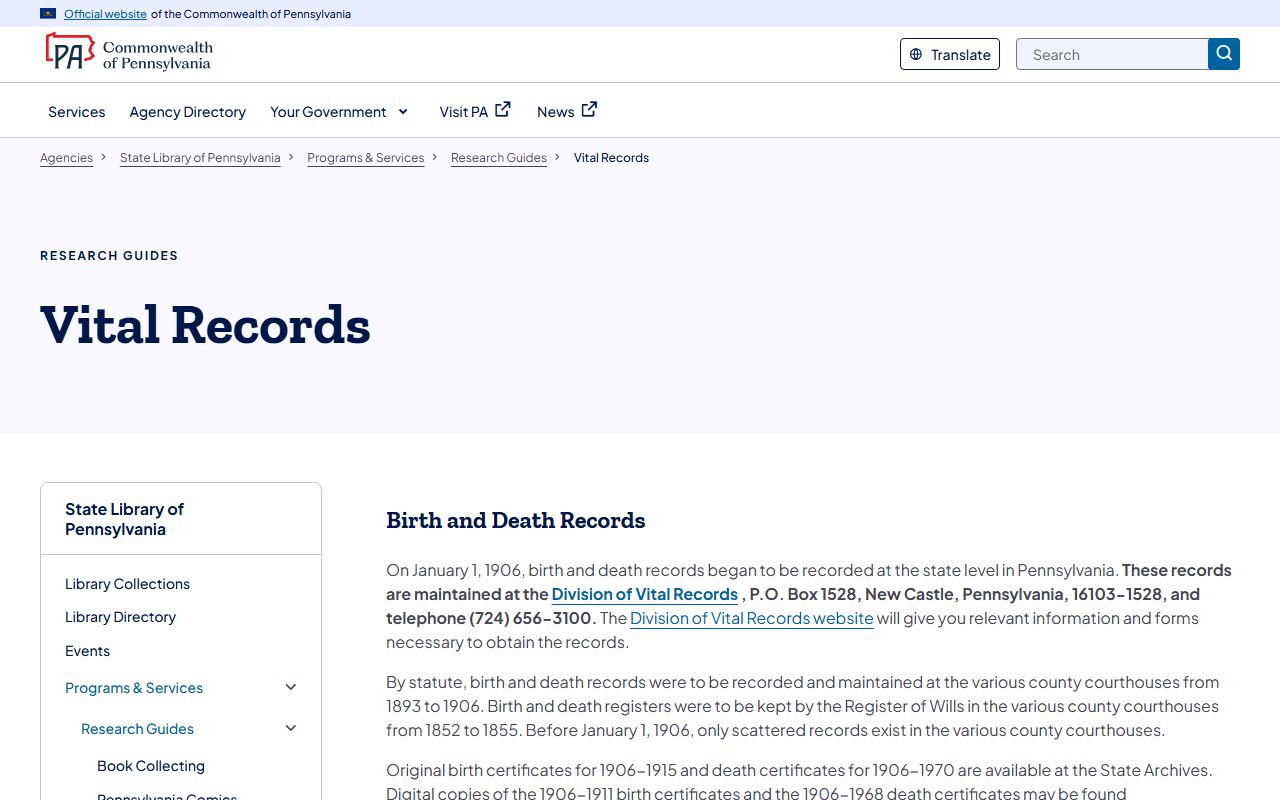
The State Library guide is a practical starting point for anyone who needs to understand which repository holds records from a specific era.
Genealogy Research with PA Death Records
Pennsylvania death records are a rich resource for family history research. The PA Historical and Museum Commission has partnered with Ancestry.com to make digital copies of Pennsylvania death certificates from 1906 to 1972 freely available to state residents. The Ancestry PA partnership requires only a free Ancestry.com account registered with a Pennsylvania address. Once logged in, PA residents can browse death certificates, birth certificates from 1906 to 1917, and county marriage records from 1885 to 1950 at no cost.
For researchers who do not know the exact year of death, the Division of Vital Records offers a 10-year date search for $25. This option is available by mail only and allows the state to scan a ten-year window to find the record. The PA Dept of Health genealogy page explains this process and lists what information you need to provide. Genealogy requests are not processed online. All such requests must be submitted through the mail. The Library of Congress Pennsylvania vital records research guide is another useful tool that covers both the county-level records from 1852 to 1854 and the state-level records from 1906 forward.
This image is from the PA Historical and Museum Commission Ancestry PA partnership page, showing the free access program for Pennsylvania residents.
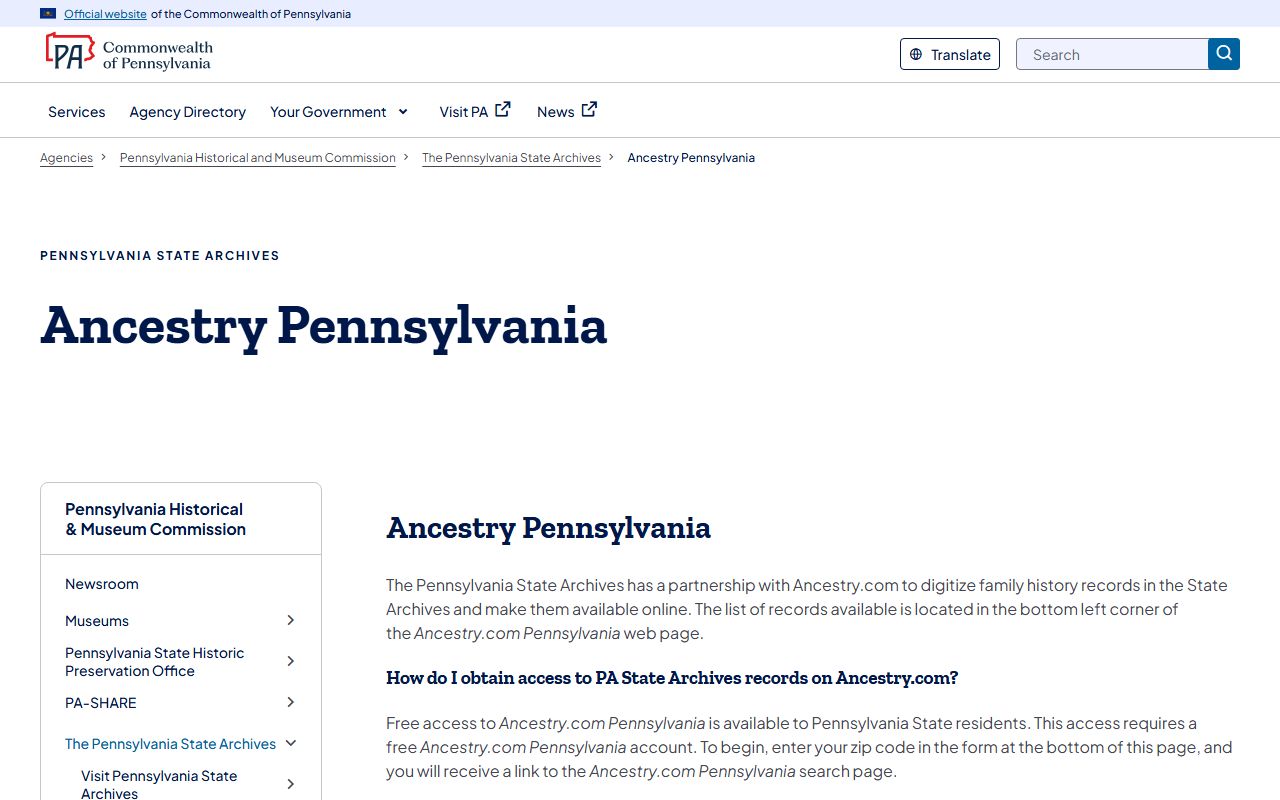
The Ancestry PA partnership gives Pennsylvania residents digital access to over six decades of death certificate images without a paid subscription.
This image is from the PA open records genealogy page, which details the steps and costs for genealogy-based requests for Pennsylvania death records.
This page also clarifies which records have crossed the 50-year threshold and are now available to any member of the public.
What Pennsylvania Death Certificates Contain
A Pennsylvania death certificate is an official legal document. It records the full name of the deceased, the date and place of death, the name of the funeral director, and information about the decedent's family. The medical version adds the cause of death, the manner of death, and any contributing conditions. All certified copies are produced on specialized security paper with a raised seal, which is what makes the document legally valid for courts and government agencies.
These records serve a wide range of purposes. Families use death certificates to close bank accounts, cancel subscriptions, transfer vehicle titles, and claim property. They are required by life insurance companies before a claim can be paid. Pension administrators need them to process survivor benefits. A widow or widower must present a death certificate before being permitted to remarry. Estate attorneys use them throughout the probate process. The document is central to nearly every legal and financial step that follows a death in Pennsylvania.
This image is from the 28 Pa. Code Chapter 1 page, which governs the administration of vital records in Pennsylvania, including death certificates.
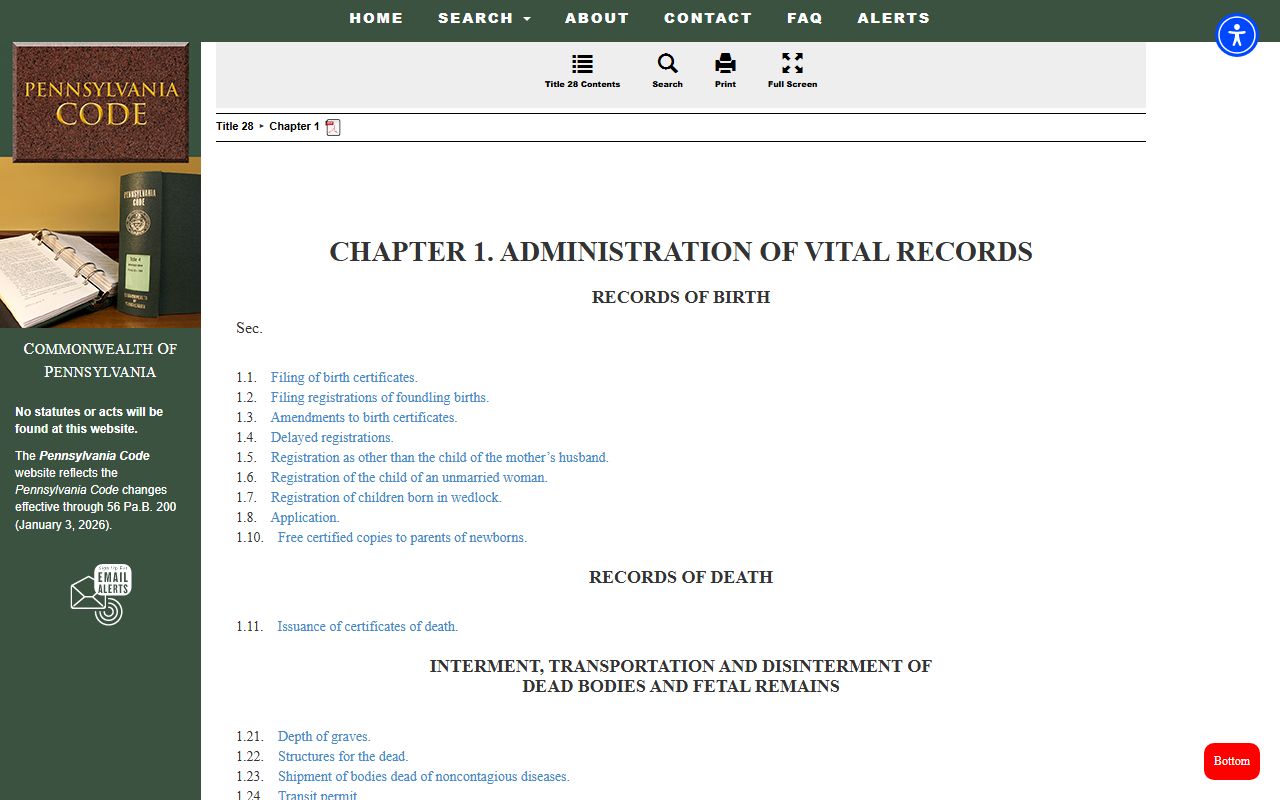
Chapter 1 of the Pennsylvania Code lays out the legal standards that every death certificate in the state must meet, from filing through any later amendments.
This image is from the Pennsylvania Vital Statistics Law statute page, which sets the legal framework for how death certificates are created, maintained, and accessed in the state.
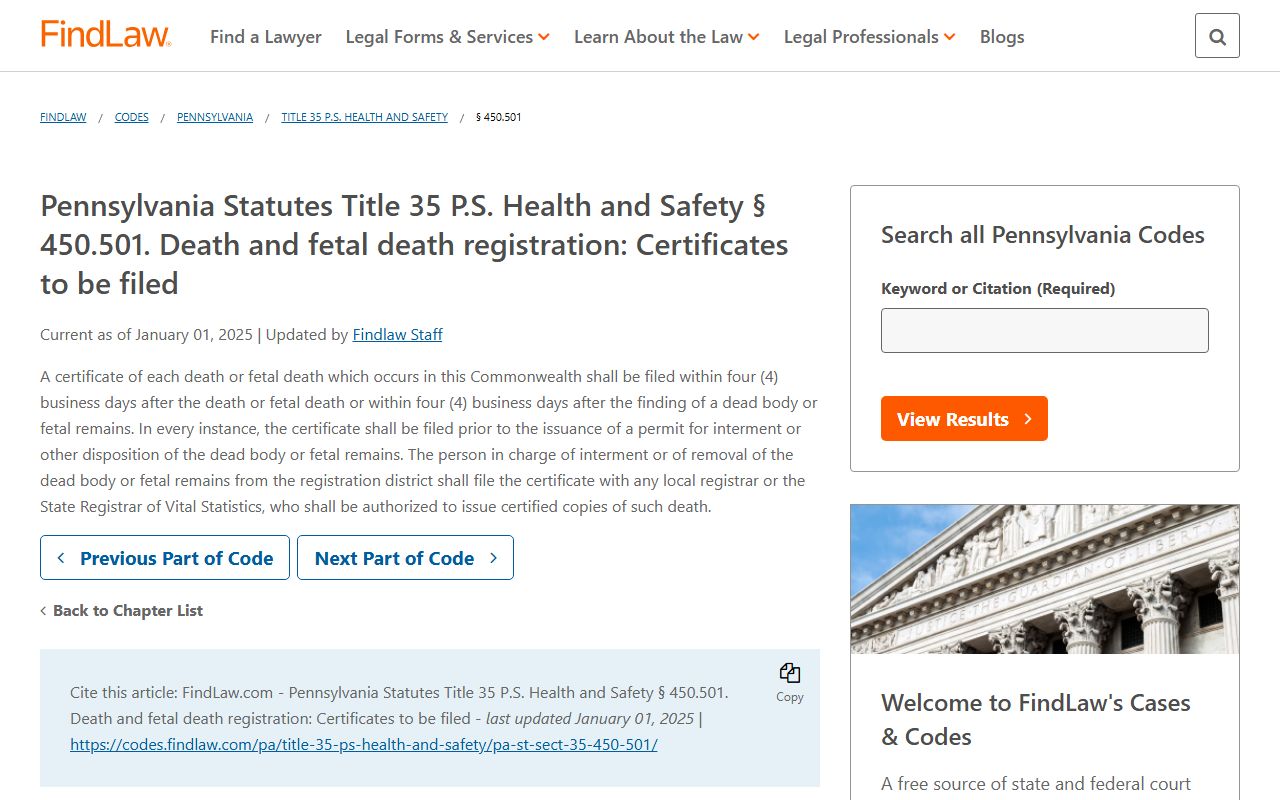
The statute requires that a certificate of each death be filed within four business days, making timely reporting a legal obligation across all 67 Pennsylvania counties.
This image is from the Library of Congress Pennsylvania vital records research guide, a useful starting point for understanding the full scope of Pennsylvania's death record collections.
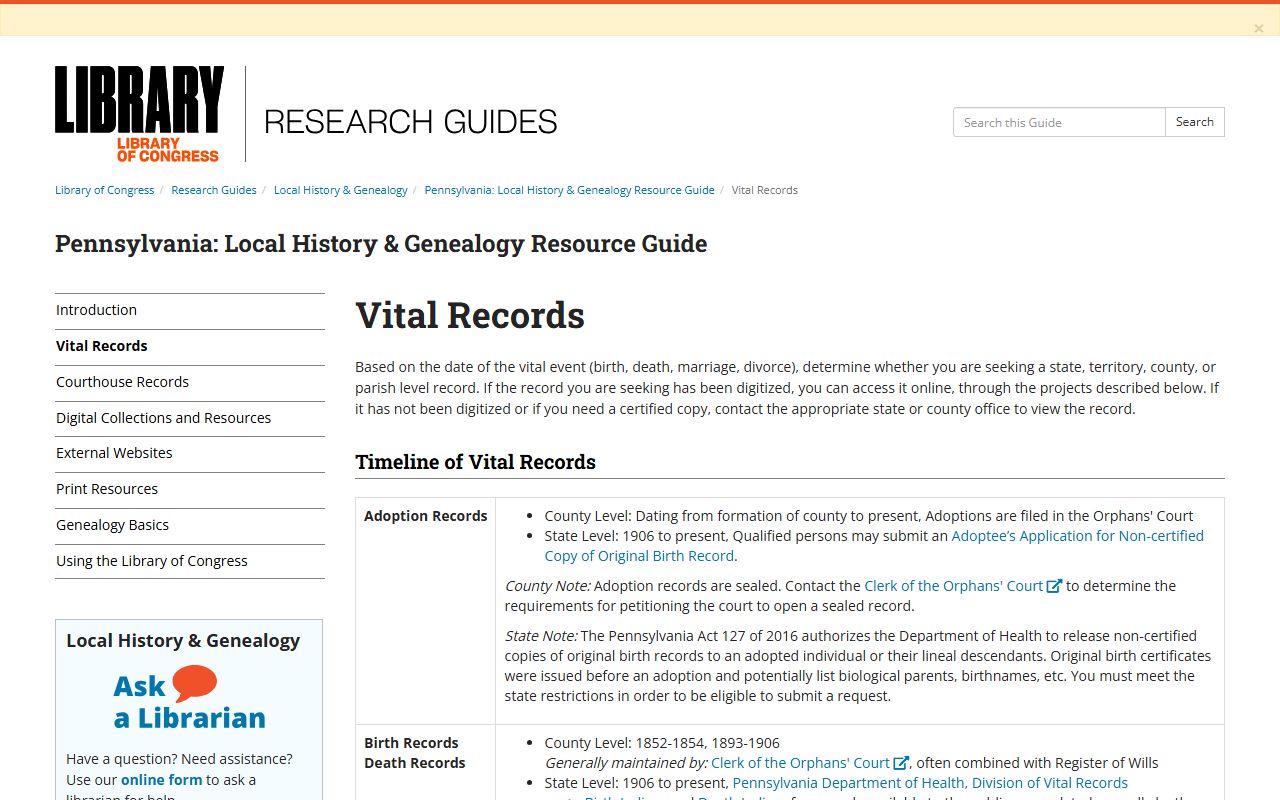
The Library of Congress guide also points researchers toward less well-known record sets, including pre-statewide registration records held at county courthouses.
Note: Researchers visiting the State Library of Pennsylvania can use its vital records research guide, available at this link, to plan their research before requesting any documents.
Browse Pennsylvania Death Records by County
Each of Pennsylvania's 67 counties has its own local records and courthouse resources. Browse the most populated counties below, or view the full list to find death records for any county.
Death Records in Major Pennsylvania Cities
Pennsylvania's largest cities have deep historical records, with some cities like Philadelphia and Pittsburgh maintaining death records decades before the state system began. Browse the city pages below for local guidance on accessing vital records in major urban areas.